At a glance
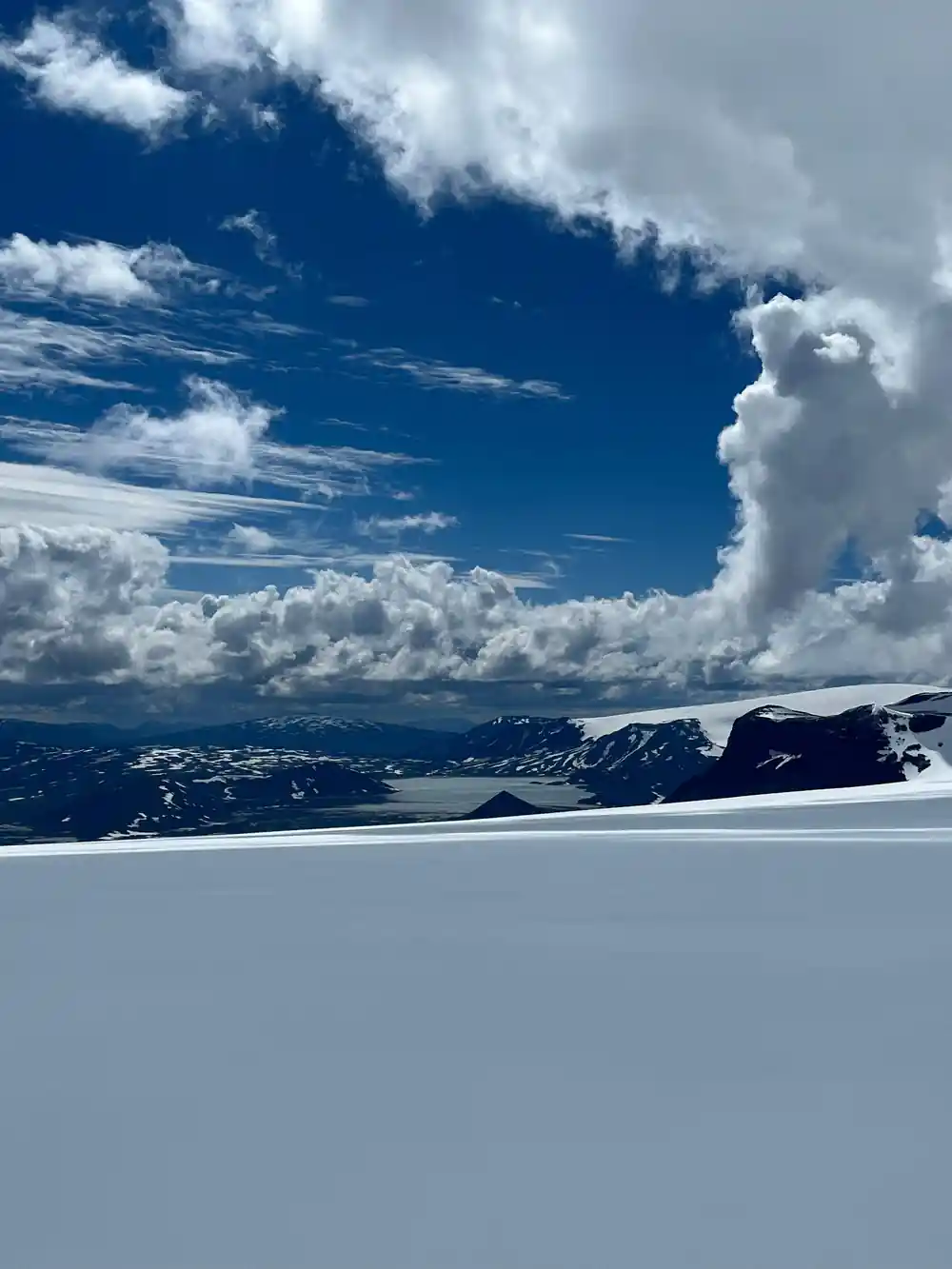
- The glacier surface shifts yearly. Blue ice forms where snow compacts over centuries, while moulins carve deep shafts as meltwater tunnels through the frozen landscape.
- Cracks open and seal each season as the ice moves and settles. You'll spot these natural fractures from your snowmobile across Langjökull's dynamic terrain.
- This snowmobile tour does not enter natural ice caves. A man-made tunnel exists within the ice cap, though access depends on conditions and your specific booking.
- The ice beneath you is thousands of years old. Each layer holds compressed snow from centuries past, creating the dense blue ice that gives the glacier its distinctive glow.
- Moving ice produces creaks, groans and rumbles. These acoustic signals reveal the constant activity happening beneath the surface of Iceland's second-largest glacier.
Why Glacier Ice Glows Blue
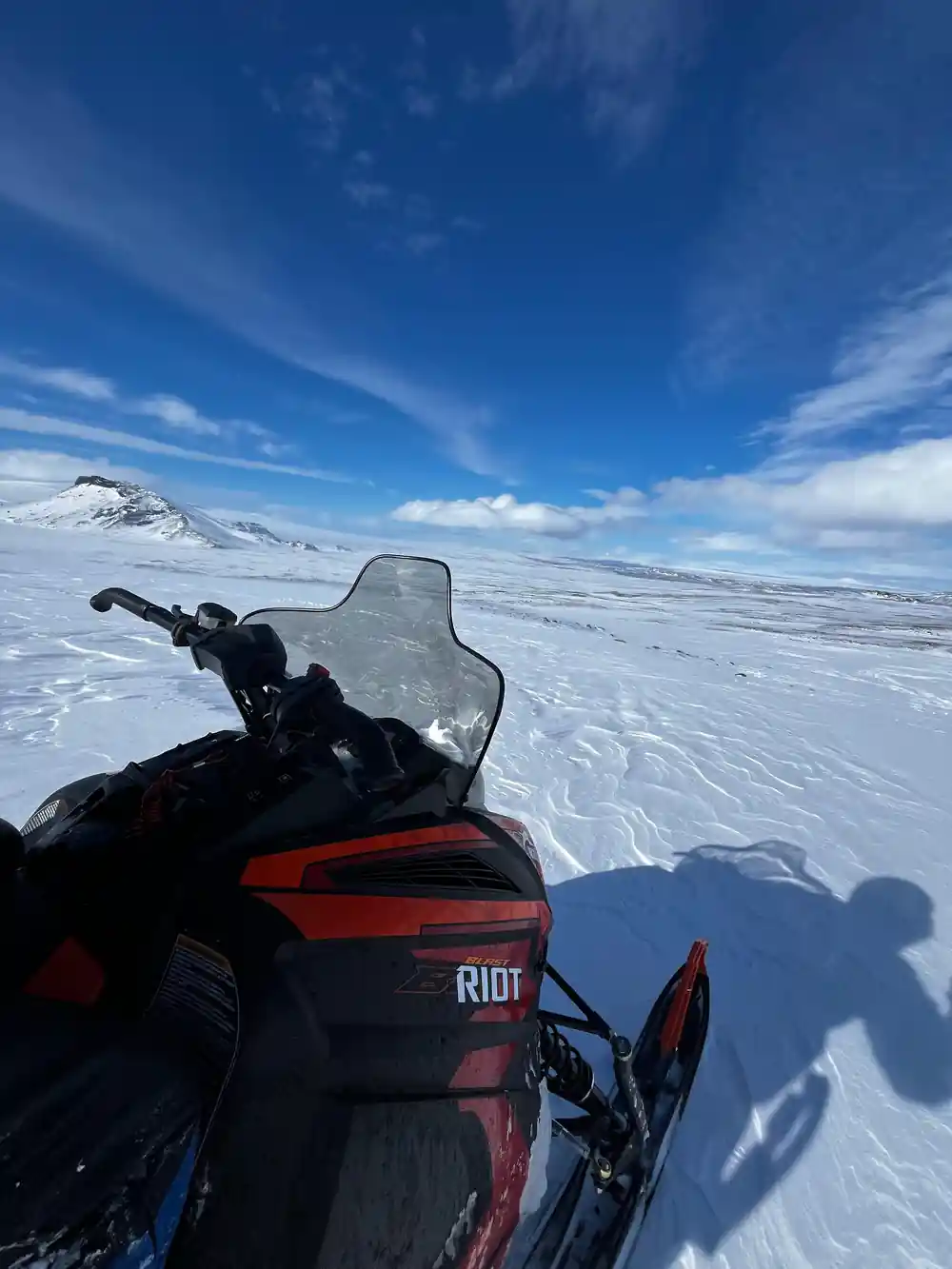
As you ride across Langjökull on a snowmobile, the ice beneath you isn't white like snow. Where the surface has been compressed by centuries of accumulation, it glows an otherworldly blue. This colour appears because glacier ice is so densely packed that it absorbs red wavelengths of light while reflecting blue back to your eye. Snow contains air pockets that scatter all colours equally, making it appear white. But under the weight of thousands of years of fresh snow pressing down, those air pockets collapse. The ice becomes so solid and transparent that light behaves differently inside it, the same way water appears blue in deep ocean trenches.
The ice you'll travel across on this two-hour tour is old enough that its transformation from snow to blue ice took centuries. The deeper you go into the glacier, the more compressed the ice becomes, and the more intensely blue it glows. This visual transformation tells the story of time itself, written into the frozen landscape.
Moulins: How Water Drains Through the Glacier
A moulin is a vertical shaft that forms when meltwater on the glacier's surface finds a crack and begins to flow downward. As the water falls and swirls, it widens the crack into a tunnel, sometimes plunging hundreds of metres into the ice. In summer, when Langjökull's surface melts more rapidly, these moulins grow larger and more active. They act like the glacier's internal plumbing system, channelling water from the surface down to the bedrock beneath. During your snowmobile tour, your guide will point out where moulins have formed and collapsed, leaving visible scars in the ice.
The dramatic opening and closing of these shafts happens seasonally. In winter, when meltwater decreases, the moulin may freeze or collapse. Come spring, new meltwater carves new paths downward. This constant reshaping of the glacier's internal structure means the ice landscape you cross today will look different next year.
Deep crevasse cuts through ancient blue ice on Langjökull
Natural Ice Caves and How They Form
Natural ice caves appear on Langjökull when meltwater carves horizontal tunnels through the glacier, particularly where water finds weakness in the ice structure. These caves are born from the movement of liquid water during the warmer months, which melts the surrounding ice and creates voids. Unlike crevasses that open on the surface, these caves form within the glacier's body, hidden from above. The ice cave formations you may see evidence of during your tour are temporary features, constantly being reshaped by the flowing water and the pressure of the surrounding ice.
These caves are remarkable because they reveal the glacier's interior. The walls display layers of ice of different ages, creating natural striations. Some caves are large enough to walk through, though accessing them safely requires specialist knowledge. Your small group tour keeps you on the stable snowmobile routes, but your local guide will explain how these formations develop and what they tell us about the glacier's behaviour.
The Man-Made Tunnel Bored Into the Ice Cap
Beneath the surface of Langjökull lies a tunnel that was constructed by humans specifically for research and exploration. This man-made passage descends into the ice cap itself, allowing scientists and visitors to step directly into the glacier's interior and observe its structure. The tunnel is a remarkable feat of engineering in one of Iceland's harshest environments. Your Husafell ice cave experience can be extended to include this tunnel, which offers close-up views of the compressed ice layers and the unique conditions inside the glacier.
The tunnel serves as a window into the climate record stored within the ice. Each layer visible in the tunnel walls represents a year or group of years of snowfall and compression. Scientists use these layers to study historical climate patterns, reading them the way archaeologists read sediment. During your time in this Husafell into the glacier tour, you'll see evidence of volcanic ash, atmospheric changes, and the sheer weight of time pressing down from above.
1,000
The ice beneath your snowmobile is up to 1,000 years old, layered and compressed into brilliant blue.
Crevasses: Opening and Closing with the Seasons
Crevasses are deep cracks that form on the glacier's surface when ice moves and stretches. As Langjökull flows downhill, stress builds up in the brittle surface ice. When that stress exceeds the ice's strength, it fractures, creating crevasses that can be dozens of metres deep. These fissures don't remain constant. In winter, cold temperatures and reduced meltwater can cause crevasses to freeze partially or completely. Come spring and summer, as meltwater increases and ice movement accelerates, new crevasses open while older ones widen.
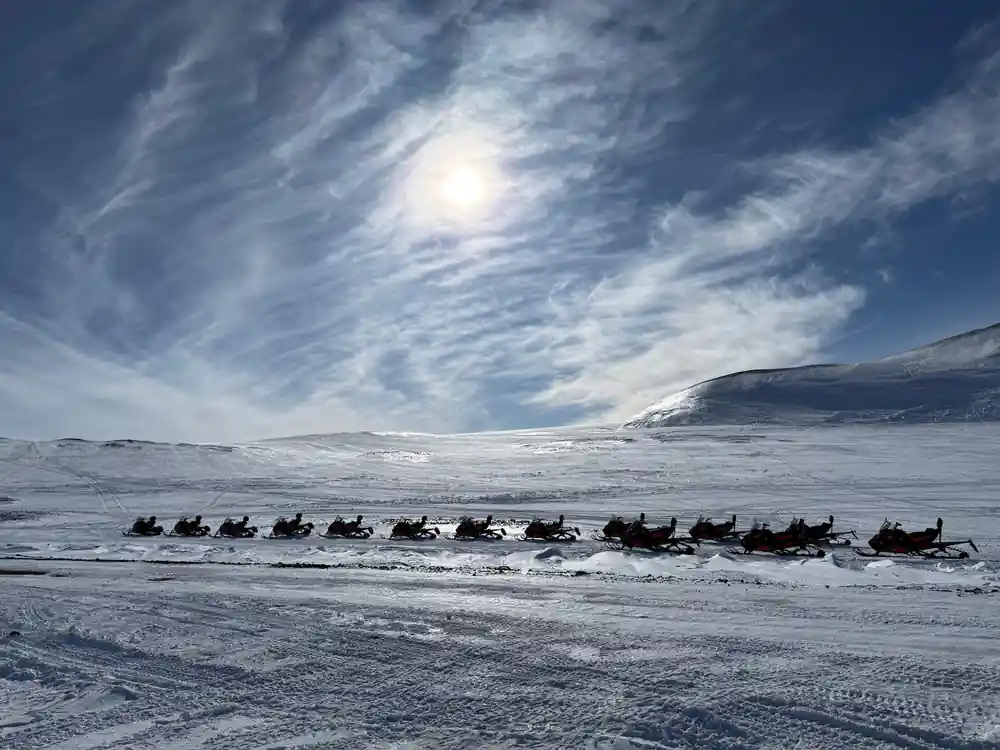
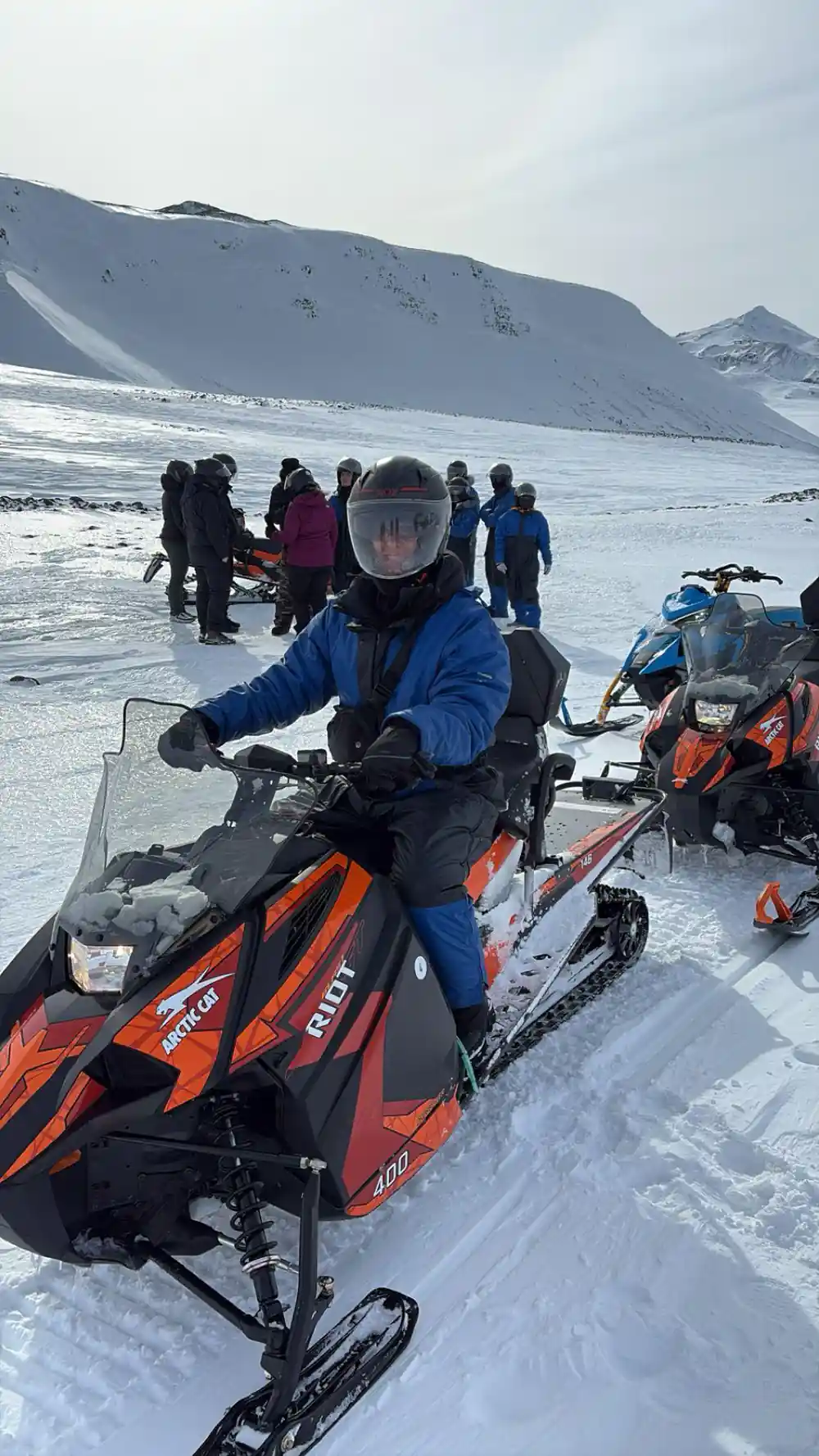
Your snowmobile route stays in safe terrain where crevasses have been identified and are monitored by your experienced guides. The opening and closing of crevasses each season is a reminder that glaciers are living, dynamic systems. The landscape you traverse is actively changing, which is why local guides are essential for safe travel across the ice.
The Age of Ice Beneath Your Snowmobile
The ice you ride across on Langjökull is not uniform in age. The surface ice in most areas is relatively young, perhaps only decades old. But beneath where your snowmobile passes, the ice becomes progressively older. In some places, ice layers 300 or even 400 years old lie within reach. This layering is visible in crevasses and in the natural ice caves formed by meltwater. By studying these layers, scientists can reconstruct centuries of climate history, identifying periods of warmer and colder temperatures based on the density and chemical composition of each year's ice.
During your two-hour tour, your guide will help you understand the timescale you're actually experiencing. The blue ice you see has taken generations to form. The surface you travel on represents a continuous record of snowfall and compression stretching back centuries. This perspective transforms a snowmobile ride into a journey through time itself.
The Sounds a Moving Glacier Makes
When you arrive on the glacier, you may expect silence, but Langjökull is constantly speaking. The sounds of a moving glacier include deep cracks and booms as ice shifts under stress and pressure. Meltwater beneath the surface rushes through tunnels, creating a roaring sound that travels upward through the ice. In summer, water cascades down moulins with a sound that echoes from within the glacier. Even in winter, the ice moves and settles, producing creaks and groans that experienced guides learn to interpret.
These acoustic signals tell your guide important information about the glacier's health and condition. The frequency and character of sounds change with the season and weather. During your tour, your guides will draw your attention to these sounds and explain what they reveal about the dynamic processes happening beneath your feet. Listening to the glacier transforms the experience from purely visual to a multi-sensory encounter with an active, evolving landscape.
Ride the Ice: One Hour Above Centuries of Frozen Time
from US$284Reserve now & pay later