At a glance
- A legendary boulder at Husafell, weighing around 154 kg, famously lifted by the 18th-century priest-strongman Snorri Björnsson and still tested by modern competitors today.
- The remarkable priest of Husafell who became known for his extraordinary strength, lifting the stone as an act of prowess and leaving behind a legacy that endures in strength traditions.
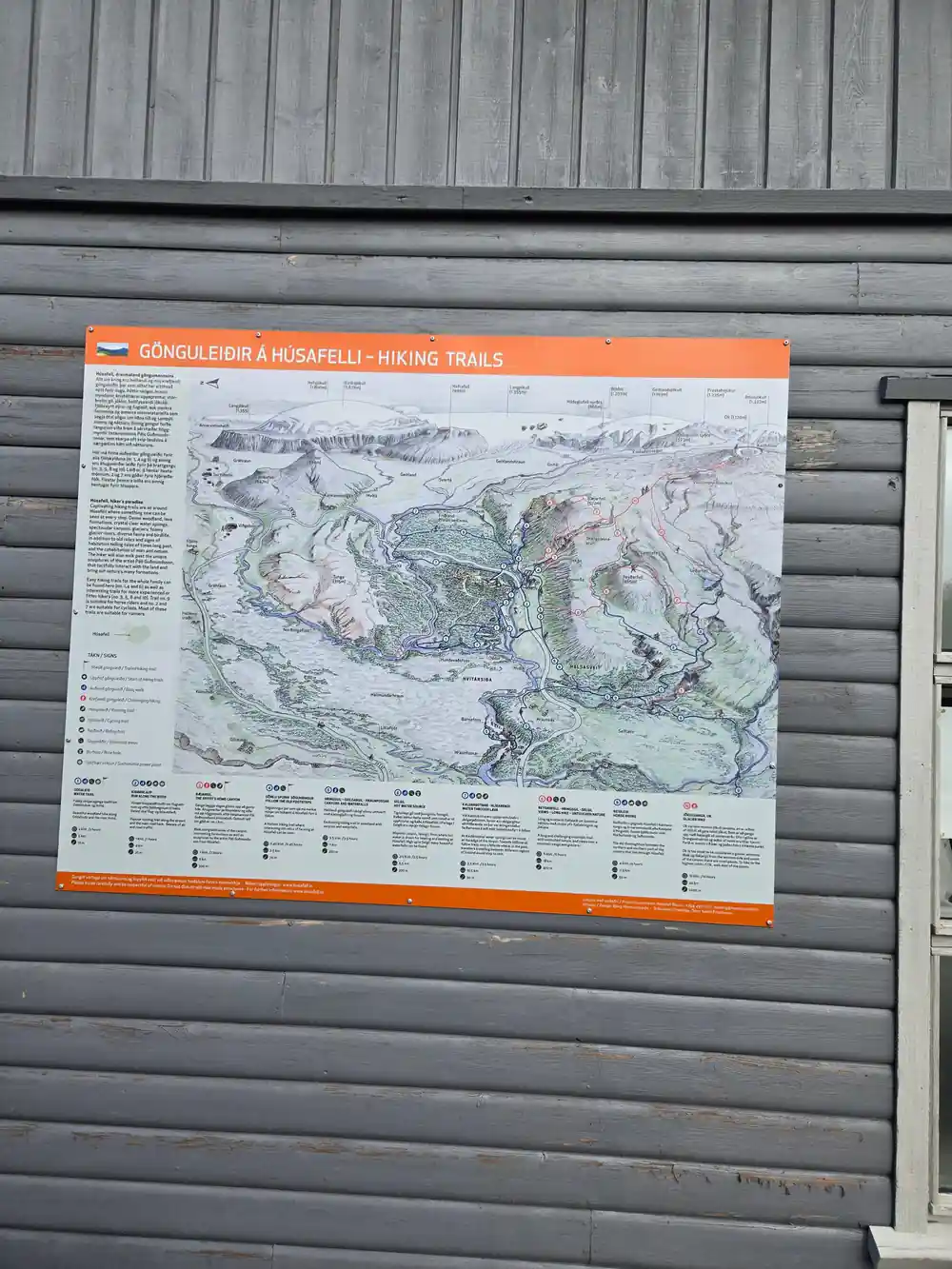
- Located on the farm at Husafell, the stone sits in a place marked on the Husafell Stone map, making it easy to pinpoint during your visit to this highland-edge settlement.
- An atmospheric historical structure on the farm grounds, representing how settlers built and maintained life at the highland edge where harsh conditions challenged survival.
- A rare farm that flourished beside the highlands due to geothermal resources and natural hot springs, creating an oasis where few other settlements could establish roots.
What Husafell Means and How to Say It
Husafell, pronounced HOO-sah-fell, takes its name from the Icelandic words 'hús' (house) and 'fell' (mountain or hill). The name describes the location itself: a homestead settled at the foot of highlands where few other farms could take root. In the Icelandic landscape, where the interior plateaus are barren and windswept, a farm at this threshold between lowland and highland represented both opportunity and defiance. The hot springs that bubble from the ground here made year-round habitation possible in a region where survival otherwise demanded constant struggle against the elements.
Today, Husafell remains a landmark on the route to Iceland's interior, known to hikers, glacier visitors, and adventure seekers heading toward Langjökull. The geothermal activity that sustained the original settlement still flows beneath the turf and rock, warming the soil and drawing visitors to the natural hot springs and canyon baths. Understanding the place name opens a window into why anyone chose to build here at all, and why the settlement endured.
Snorri Björnsson: The Priest with Uncommon Strength
In the 17th century, Husafell was the home of Snorri Björnsson, a priest of remarkable physical power who became a figure of local legend. Unlike the scholarly clerics of urban parishes, Snorri combined his religious duties with the hard labour required to maintain a remote farm. His reputation grew not from documents or formal records, but from stories of feats that seemed beyond ordinary capability. He could lift and move stones that other men could barely shift, and he demonstrated these abilities repeatedly, building and rebuilding the stone walls and structures that enclosed his livestock.
Snorri's strength became woven into the identity of Husafell itself. Generations later, when modern strongman competitions began searching for traditional lifting events rooted in real history, they looked back to figures like Snorri and found in his story a living connection to contests that had never truly died in Iceland. His legend suggested that extraordinary strength was not invented for sport, but had always existed as part of life in harsh landscapes where physical capability meant the difference between a thriving farm and failure.
Husafell farm nestled at the highland edge, with turf church and stone walls
The Lifting Stone and the Goat Pen Wall
The Husafell Stone itself emerged from practical necessity. A large natural stone lay in the goat pen that enclosed Snorri's livestock, and rather than break it or remove it by dragging, Snorri developed a technique to lift and carry it. He would position himself with the stone against his chest, wrap his arms around it, and carry it over his shoulder, moving it from one part of the pen to another as the work of farm maintenance required. This was not showmanship. It was a method that allowed one strong man to accomplish alone what might otherwise need several people and teams of animals.
The stone's weight became the subject of endless speculation over centuries. What matters more than any single estimate is that the method itself proved so efficient and so distinctly Icelandic that it survived in the cultural memory. Visitors to Husafell can still see the stone today, positioned where it has rested for generations, a physical reminder of both practical strength and the ingenuity required to farm at the highland edge. The technique of holding weight against the body and lifting over the shoulder has no peer in other strongman traditions, making it uniquely rooted in this place.
Why Modern Strongmen Copy the Stone Lift
When contemporary strongman competitions sought to add events with historical depth and cultural authenticity, Iceland's lifting stone tradition offered exactly what they needed: a lift that was genuinely old, genuinely rooted in a real person and place, and genuinely effective at testing functional strength. The Husafell Stone became a standard event in modern strongman contests, alongside other traditional Icelandic lifting challenges. Athletes from around the world now train specifically to master the technique that Snorri Björnsson developed three centuries ago.
The lift's popularity stems from what it demands of the body. Unlike barbell lifts that were designed for sport, the stone lift requires the lifter to manage an irregular object, to engage the entire core and legs, and to develop the kind of practical strength that translates to real-world capability. Competitors study the stone at Husafell, learn its exact dimensions and weight, and carry that knowledge home to their training. In this way, a working farm's practical problem became the foundation for a sport that connects modern athletes directly to a 17th-century priest and his daily labour.
154 kg
Snorri Björnsson's lifting stone weighed 154 kilos, a test of strength that shepherds knew by heart.
The Turf Church at the Farm's Edge
Beside the farm buildings at Husafell stands an old turf church, a structure that embodies the practical faith of the Icelandic highlands. Built from turf and stone, with a steep roof designed to shed snow, the church served the scattered farms and herds of the region. Its construction reflects the same ingenuity that allowed Snorri to farm at all: using materials close at hand, building for permanence despite harsh conditions, and maintaining community worship in isolation. The turf church remains one of the best-preserved examples of this building tradition in Iceland.
The presence of a church at Husafell underscores that this was a genuine settlement, not a temporary outpost. Families lived here across generations, raised children here, and maintained religious practice in a place where the nearest urban parish lay days of travel away. The turf building survives because it was built to last, its thick walls and insulating properties protecting worshippers from the weather. Today it stands as a museum and a testament to the spiritual life of highland farms.
Survival at the Highland Threshold: Geothermal Advantage
Husafell could support a farm where the surrounding highlands could not because of the geothermal activity beneath the soil. Hot springs flowing from the earth provided heat that extended the growing season, warmed the water for livestock, and made the land habitable year-round. In a country where winter temperatures can make outdoor work nearly impossible and where fuel for heating is scarce, geothermal resources transform marginal land into viable farmland. Snorri Björnsson and his successors understood this advantage and built their lives around it.
The natural hot springs and canyon baths at Husafell drew visitors even in historical times, and they continue to be a reason people visit the area today. The combination of geothermal warmth and highland landscape creates a unique environment where a farm could flourish while the surrounding plateaus remained empty. This is why settlement persisted here, why the turf church was built and maintained, and why Husafell remains a meaningful place in Icelandic geography. The farm's survival was no accident; it was enabled by forces beneath the earth that Snorri Björnsson and his heirs learned to live with and benefit from.
Visiting Husafell: A Place Between Worlds
Husafell occupies a unique position in Iceland's landscape and history. It marks the edge where farmable lowland gives way to the barren interior, where settled life meets wilderness, and where geothermal waters make human habitation possible in an otherwise inhospitable region. Visitors arriving here from Reykjavík travel through increasingly remote terrain, watching the landscape shift from green valleys to rocky moorland. The farm, the church, the lifting stone, and the hot springs all exist within a compact area, making Husafell accessible as a destination while retaining the sense of isolation that shaped its history.
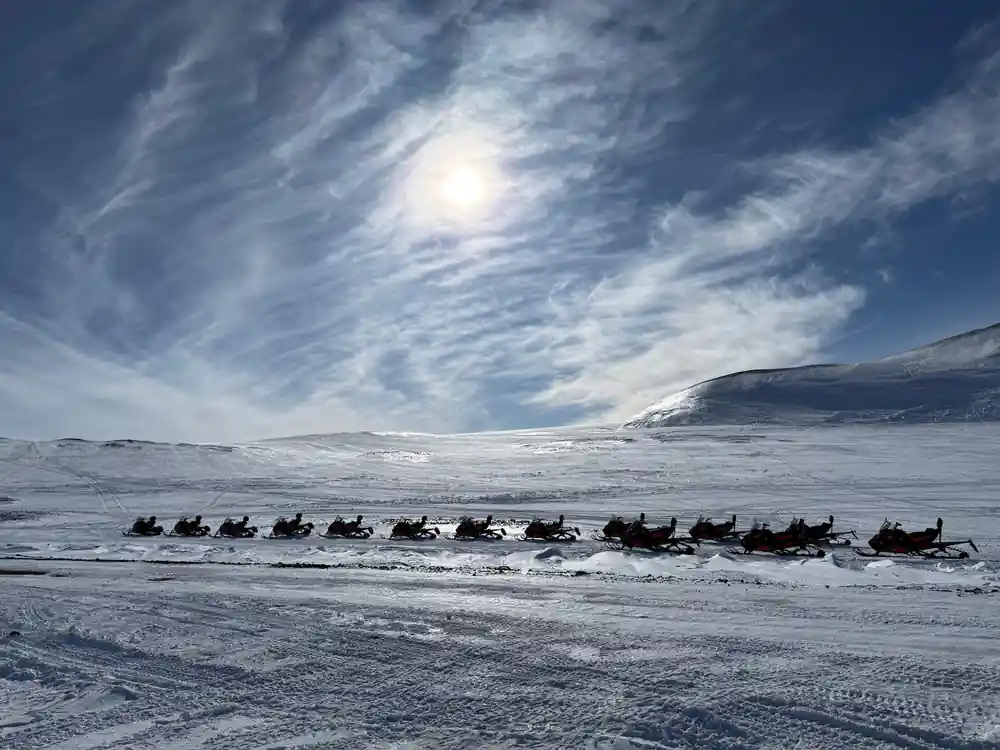
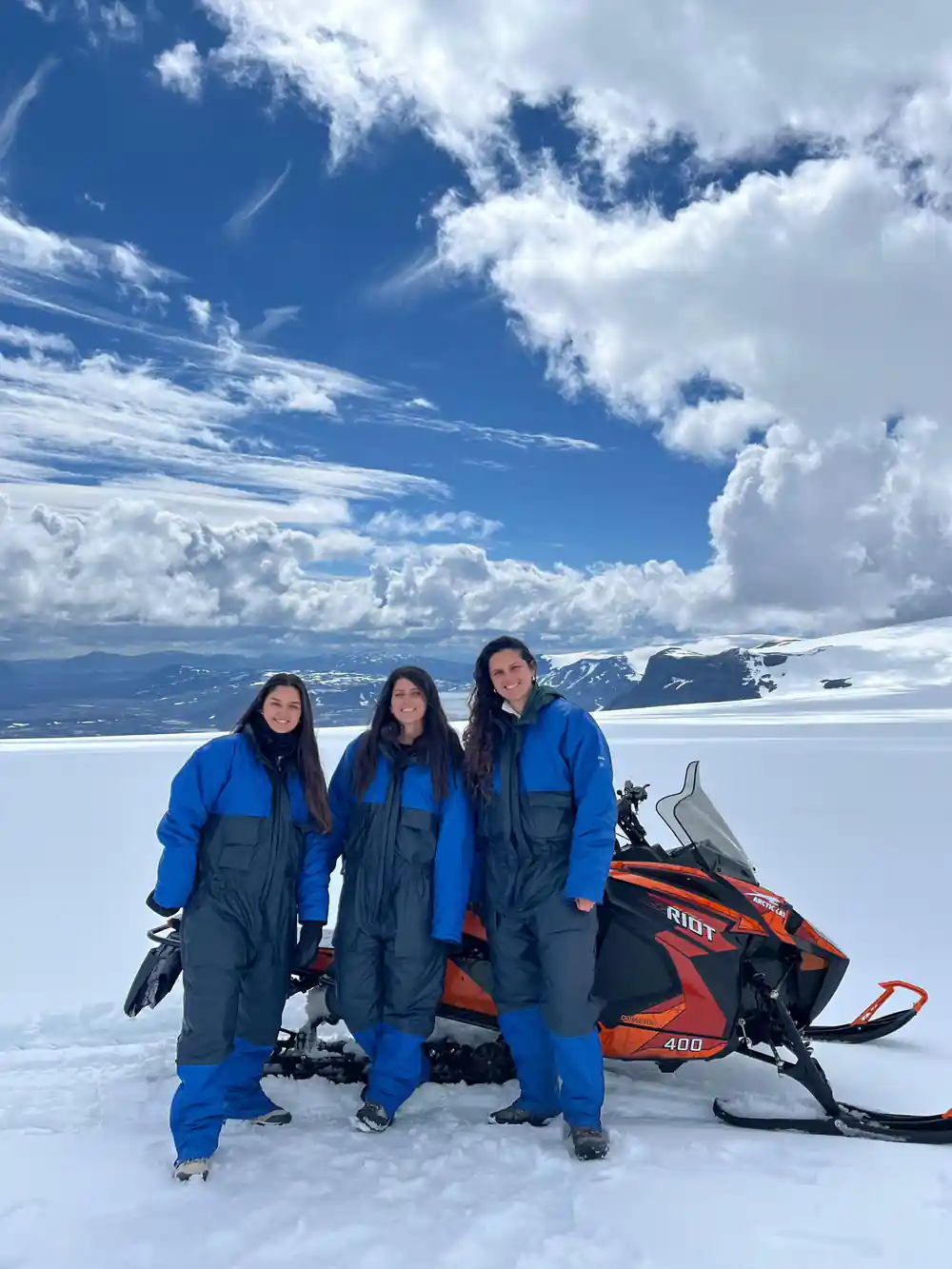
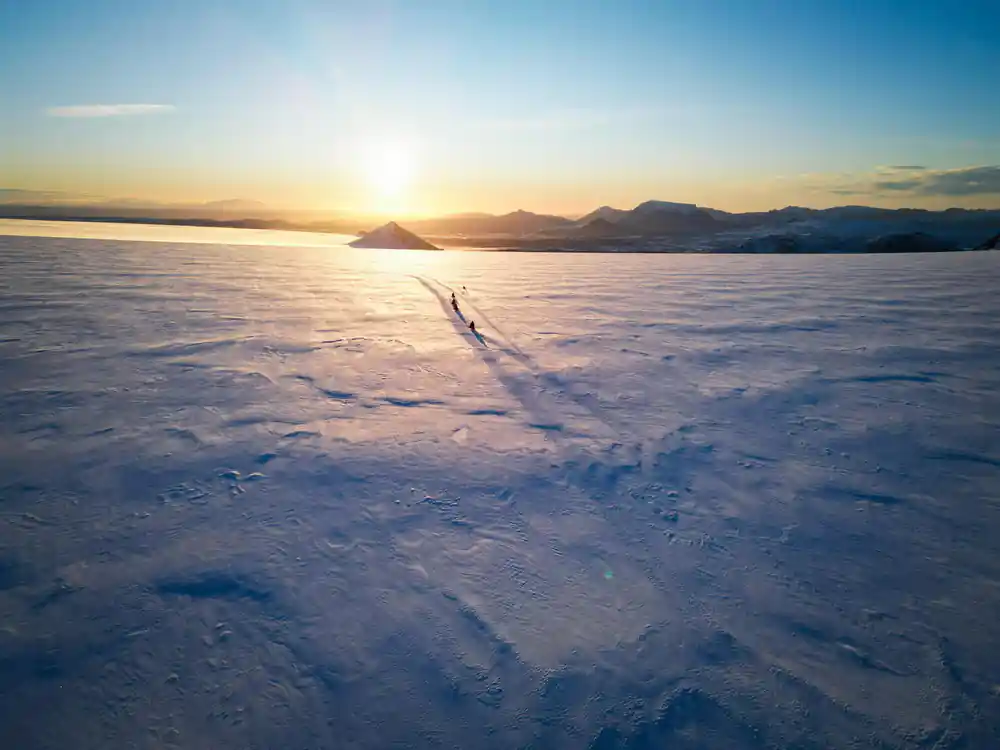
Whether you come for the snowmobiling adventure on Langjökull Glacier, to experience the natural hot springs, or to understand the historical roots of Icelandic strength and settlement, Husafell offers a rare convergence of natural wonder and cultural depth. The place rewards slow exploration: walking the grounds, seeing the stone, entering the turf church, and understanding how one remarkable priest and his successors built a life in a landscape that seemed to forbid it. Husafell tells the story of Iceland itself: human resilience, practical ingenuity, and the power of ordinary people to thrive in extraordinary circumstances.
Experience Highland History Before the Glacier
from US$284Reserve now & pay later