At a glance
- A reinforced 4x4 built for Iceland's rough terrain, with specially deflated tyres that grip snow and cross rivers on the highland route to Langjökull.
- From Husafell, your Super Jeep climbs steep mountain passes and fords unbridged rivers, reaching the moraine base camp at the glacier near Husafell in under an hour.
- Lower pressure spreads the jeep's weight across soft snow and ice, improving grip where ordinary vehicles would slip or sink on the approach to the glacier.
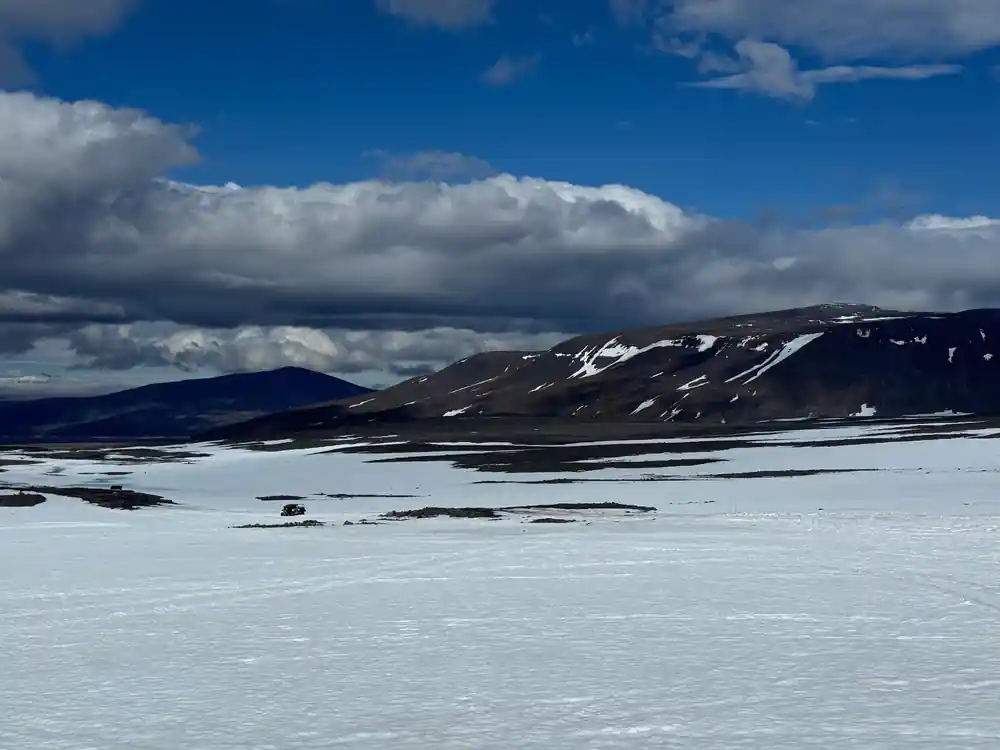
- Your jeep arrives at the rocky staging ground where the glacier near Husafell meets the valley, the starting point for your snowmobile adventure across the ice.
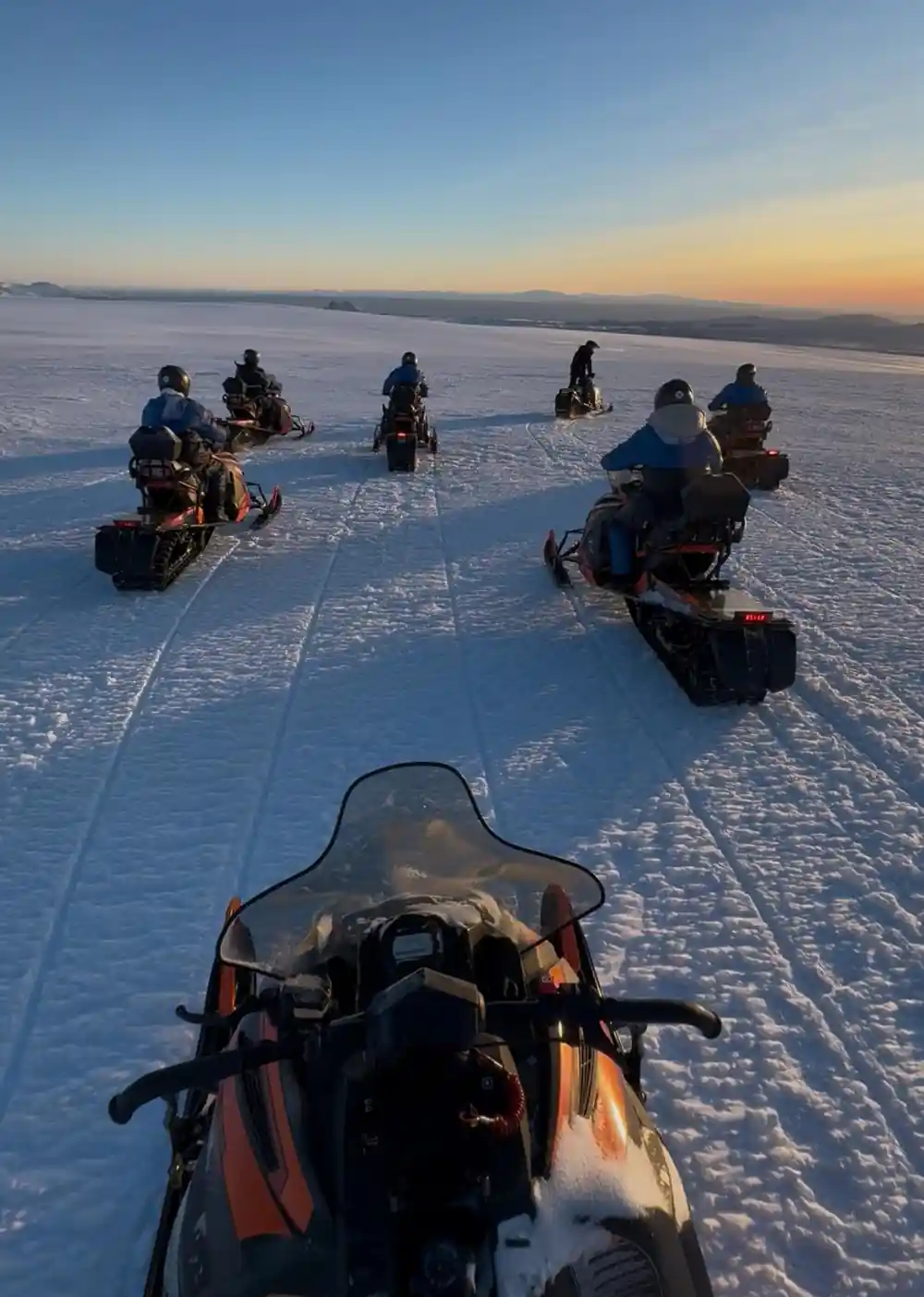
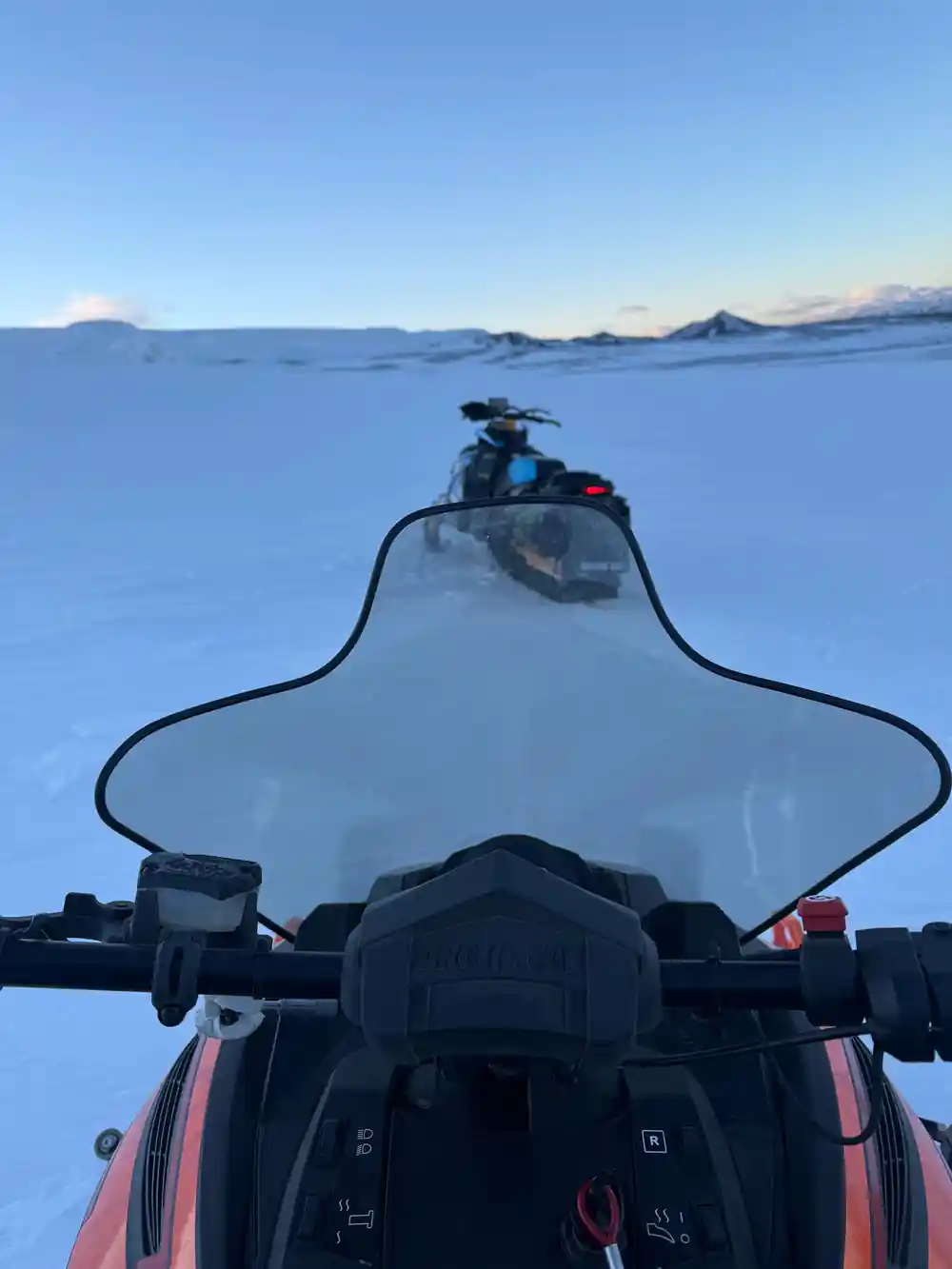
- Expect roughly 50 minutes in the Super Jeep climbing to the base camp, then a full hour riding brand-new snowmobiles across Langjökull's snowy expanse.
What Makes a Super Jeep Different
A Super Jeep is not a standard four-wheel-drive vehicle. These modified machines sit far higher off the ground than ordinary SUVs, equipped with custom lift kits that raise the chassis several inches above the frame. The tyres are oversized and specially designed for extreme terrain, gripping surfaces that would defeat regular vehicles. Inside, the cabin is reinforced and the seating arranged to handle steep angles and rough ground. This combination of height, tyre quality, and structural modification allows Super Jeeps to traverse Iceland's highland interior where conventional cars cannot venture.
On the route to Langjökull, these capabilities matter immediately. The vehicle climbs grades that would trap a standard car within metres of the starting point. Passengers sit higher than they would in a regular 4x4, offering better sightlines across the surrounding landscape. The driver controls the experience with precision, using the jeep's mechanical advantages to navigate obstacles that seem impassable from the road below. For the two-hour journey from Husafell to the glacier, a Super Jeep transforms an impossible drive into a thrilling ascent.
Why Tyres Are Deflated on Snow
As the Super Jeep approaches higher elevations where snow thickens, the driver stops to deflate the tyres partially. This is not a malfunction but a deliberate tactic. Reducing air pressure increases the tyre's surface area in contact with snow, spreading the vehicle's weight across a wider footprint. A tyre running at full pressure concentrates force into a smaller patch, causing it to sink and lose grip. Deflated tyres, by contrast, sit flatter and wider, distributing weight evenly and preventing the jeep from breaking through the snow crust.
This technique is standard practice for vehicles crossing snow-covered highlands in Iceland. The driver monitors pressure carefully, adjusting for terrain changes and snow depth. At the base camp near Langjökull, the tyres are re-inflated before descent, restoring normal handling for the return journey. Passengers often find this moment surprising - a simple mechanical adjustment that makes the difference between forward progress and getting stranded on white, featureless terrain.
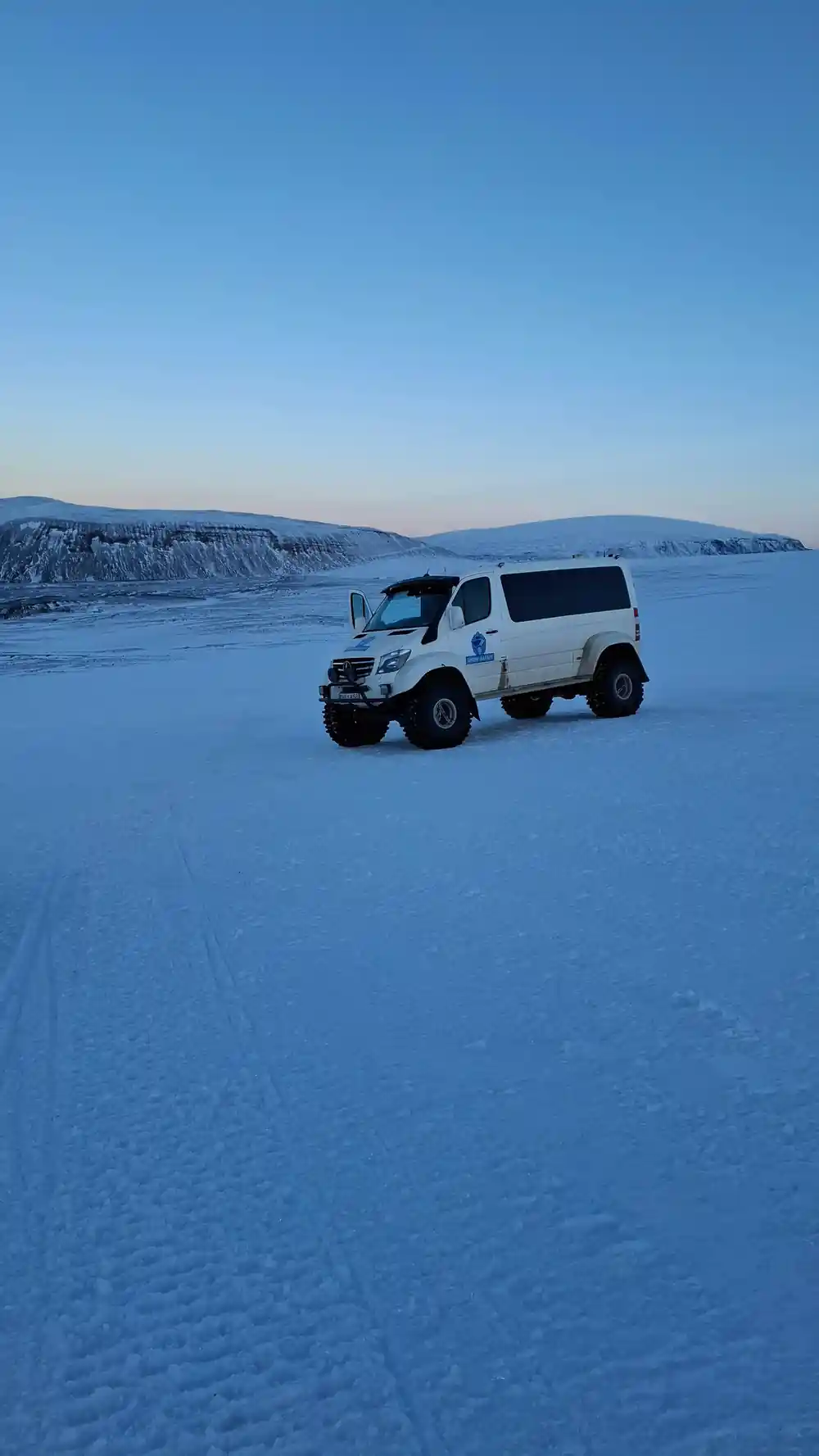
Super Jeep at the moraine, Langjökull ice edge beyond
The F-Road and River Crossings
The highland route from Husafell is classified as an F-road, a designation that closes it to ordinary cars outside summer and makes a high-clearance vehicle essential year-round. The surface is not paved but consists of gravel, volcanic sand, and exposed bedrock. Sections wash out each winter and are re-graded each spring, ensuring the road remains passable but never entirely smooth. Drivers familiar with these routes understand every scar in the ground, every stream crossing, and every slope angle. A Super Jeep's tyres bite into loose material where normal cars would spin and slide.
Partway up, the jeep crosses rivers. These are not deep channels but broad, shallow flows of glacial meltwater, grey with suspended silt. The driver times these crossings carefully, aiming for the firmest gravel bed and the shallowest section. Water flows around the tyres as the jeep crawls across, engine rumbling with effort. Passengers experience the reality of Iceland's interior: a landscape where water, rock, and ice dictate the route, and roads exist only where engineering has chosen to negotiate with nature rather than fight it.
The Landscape Through the Jeep Windows
As elevation increases, the vegetation changes dramatically. Low brushwood and grass give way to bare ground. Colour shifts from green to grey to black. The terrain becomes noticeably volcanic, with dark stone scattered across pale moss and lichen. On clear days, the view extends for dozens of kilometres across Iceland's interior plateau. On overcast days, mist closes in, and the landscape becomes intimate, revealing texture and detail in rocks and earth that distant views cannot show. The jeep's height allows passengers to see over ridges and across valleys, perspective impossible from a regular vehicle or from ground level.
The final approach reveals the glacier itself - a massive white expanse with visible ripples and crevasses across its surface. Langjökull is Iceland's second-largest glacier, stretching across some 950 square kilometres. From the moraine base camp, where the jeep finally stops, the ice dominates the view completely. The black rocky terminus contrasts sharply with brilliant white ice beyond. Peaks emerge from the surface. The scale becomes apparent only when standing there: what looked distant from lower elevations towers above, cold and ancient and utterly silent.
0.5
Tyres deflated to 0.5 bar grip snow where standard pressure would sink.
The Moraine Base Camp
The moraine base camp sits at the foot of the glacier, built on rock and gravel pushed downslope by ice over thousands of years. Facilities here are simple and functional: shelters, warming areas, and equipment stations. This is where the Super Jeep journey concludes and the snowmobile experience begins. The camp is positioned at the exact boundary between terrain the jeep can handle and the open ice that requires a different vehicle. From this point, the glacier unfolds ahead, and the transition from earth to ice happens within metres.
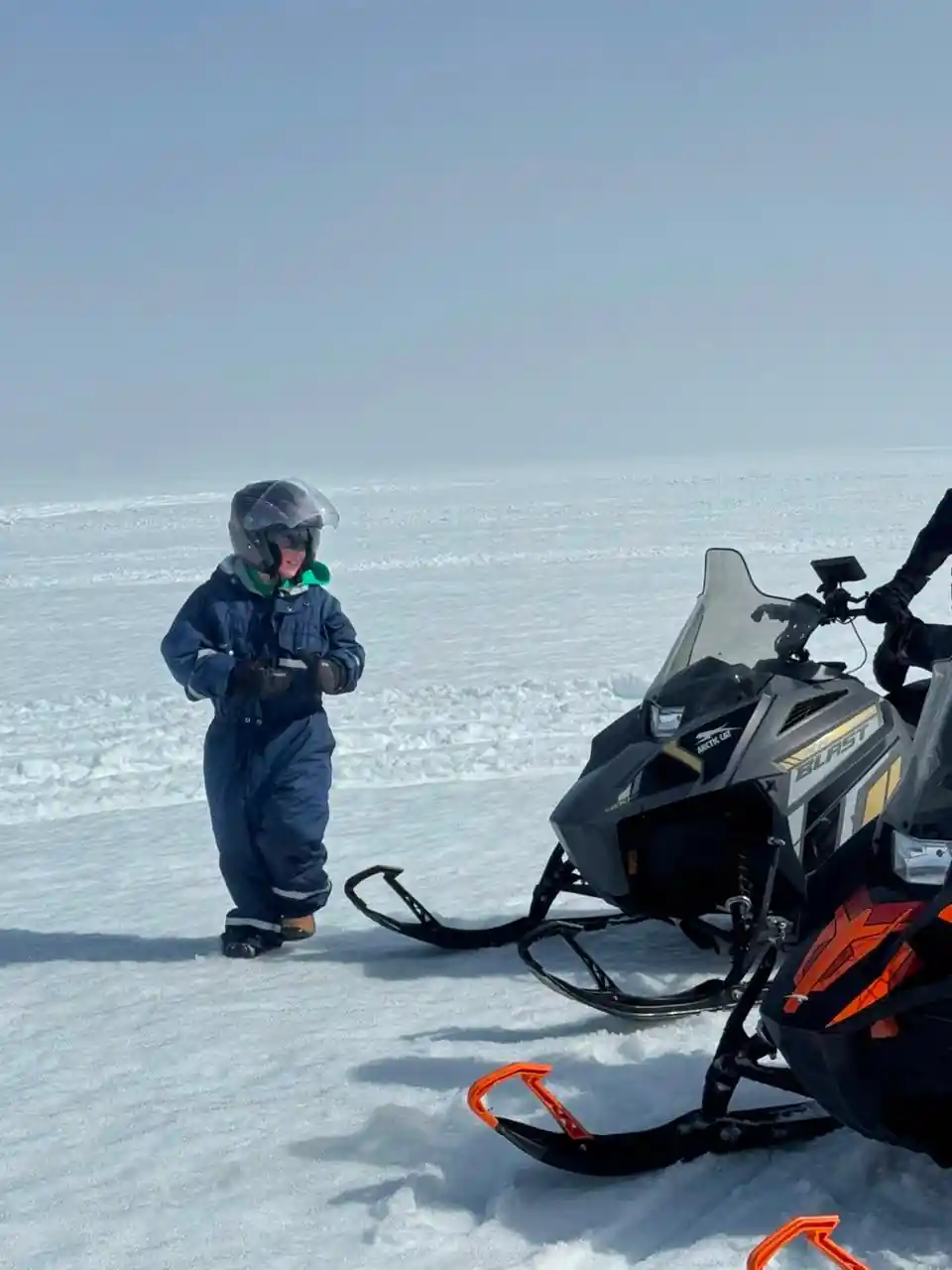
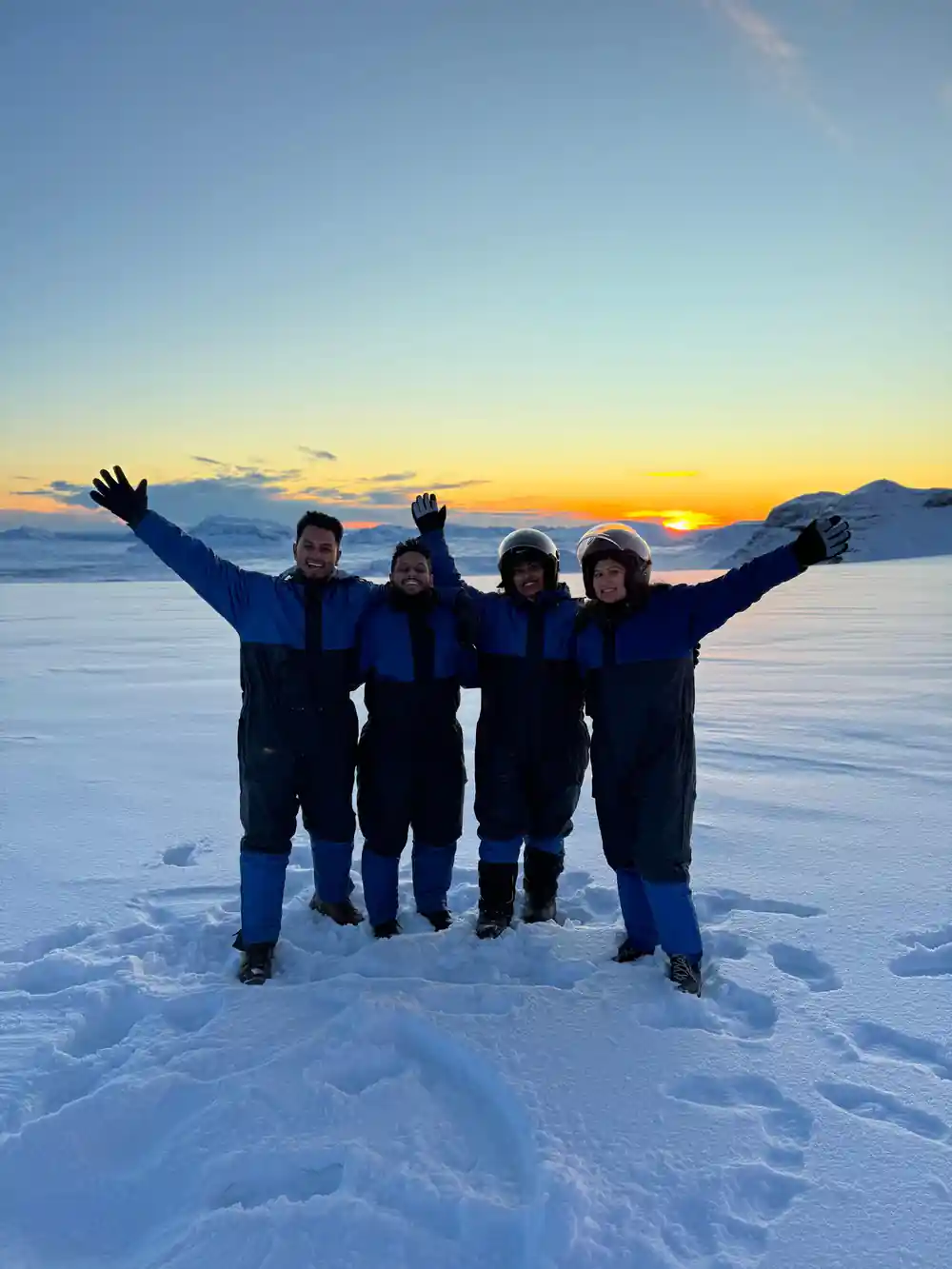
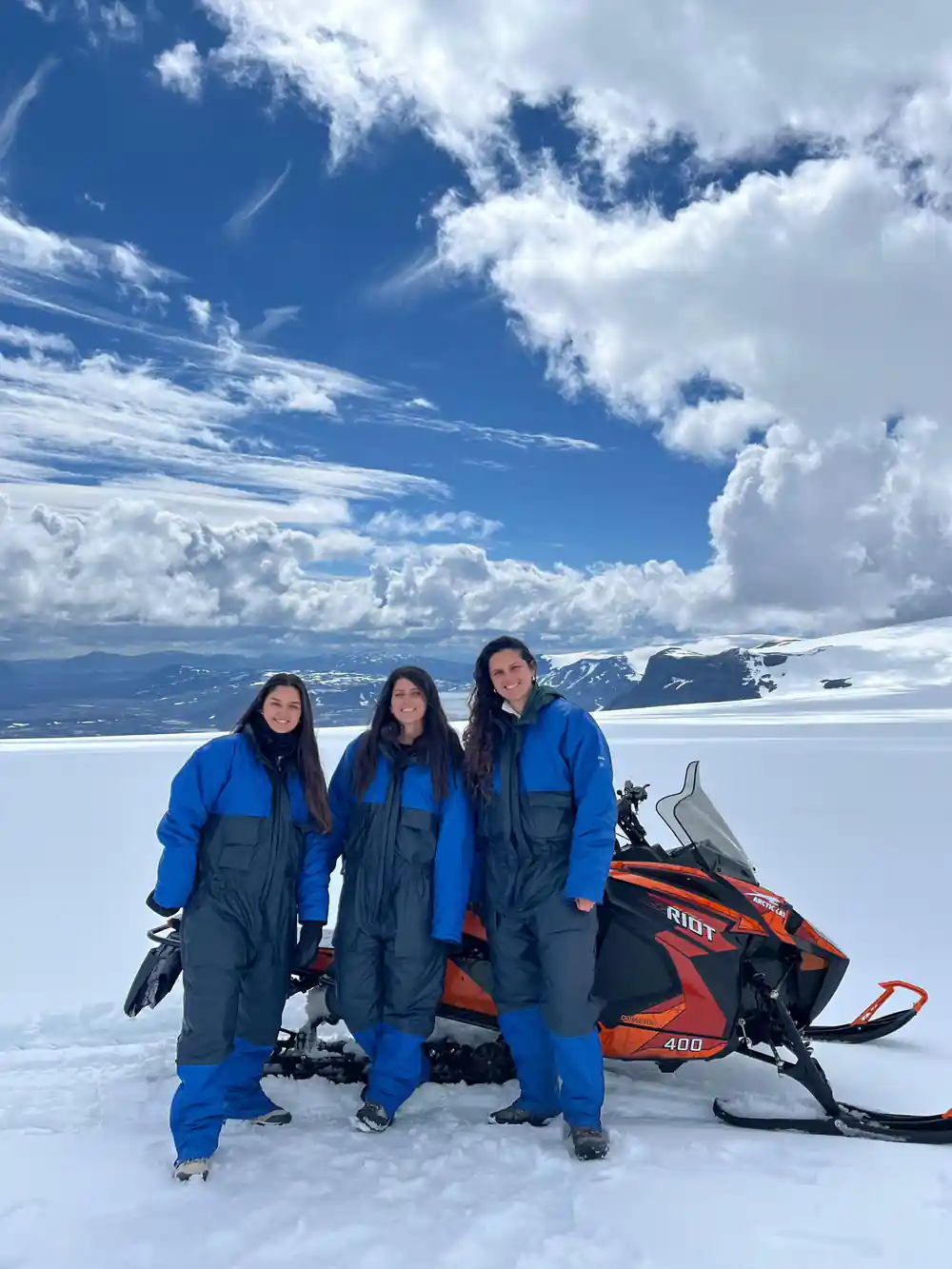
Staff at the base camp prepare guests for snowmobiling, distributing helmets, overshoes, warm overalls, and buffs to every participant. Safety instructions cover operation, hazards, and emergency procedures. The camp itself offers a moment of transition, a chance to adjust to the altitude and the cold before heading onto Langjökull itself. Standing here, the glacier's true scale becomes clear: not an abstract expanse seen from afar, but a physical reality that will soon be underfoot, felt through a snowmobile's engine and felt in the cold air rushing past during a full hour of riding across its surface.
Why Private Vehicles Cannot Reach the Glacier
Visitors occasionally ask why they cannot drive their own car to Langjökull. The answer lies in the road conditions and vehicle capabilities required. The F-road is closed to standard cars because the terrain literally destroys ordinary suspensions, tyres, and undercarriages. Regulations exist to protect both visitors and the landscape: driving an unsuitable vehicle on these routes risks breakdown in remote terrain, requiring expensive rescue operations. The highland interior has no fuel stations, no repair services, and no immediate help. A stranded driver or passenger could face serious danger in changing weather.
A Super Jeep, by contrast, carries communication equipment, emergency supplies, and a trained operator who knows every hazard on the route. The vehicle's mechanical design handles conditions that would damage or disable a regular car. Insurance and rescue protocols are in place. The operator's experience means obstacles are navigated safely, river crossings timed correctly, and pressure adjustments made at the right moments. The restriction is not arbitrary bureaucracy but a practical acknowledgment of what the highland environment requires.
The Jeep Climb and Final Approach to Ice
The steepest section comes in the final stretch toward the glacier. The grade angles noticeably upward, and the jeep climbs at an angle that would seem impossible in an ordinary vehicle. Passengers lean back in their seats as the nose points skyward. The engine works harder, exhaust rising in visible plumes in the cold air. Gravel and rock slip slightly beneath the tyres, yet grip holds. The driver's hands remain steady on the wheel, eyes fixed ahead. This climb, lasting perhaps five minutes but feeling longer, is the physical climax of the Super Jeep journey. It demonstrates exactly why these vehicles exist and what their capabilities are.
At the top of this climb, the terrain flattens and the moraine base camp appears ahead. The jeep crests the final rise, and suddenly the full vastness of Langjökull opens before the windows. The two-hour ascent from Husafell concludes here, at the threshold where the jeep's journey ends and the snowmobile snowmobile adventure begins. Passengers disembark, legs slightly shaky, adrenaline high, ready for the next phase of their experience on the ice.
Experience the Highland Drive Included
from US$284Reserve now & pay later
| Standard 4x4 | Super Jeep | On Foot | |
|---|---|---|---|
| Tyre Size | Standard | Oversized, low-pressure | N/A |
| Ground Clearance | 8 - 10 inches | 16+ inches | N/A |
| River Fording | Limited | Deep water capable | Not possible |
| Highland Access | Restricted areas only | Full glacier route | Prohibited |
| Moraine Base Camp | Cannot reach | Reaches safely | Hours of hiking |