At a glance
- The operator supplies a snowmobile one piece suit, helmet, buff, overshoes, and safety instructions at base camp. Arrive ready to dress in layers.
- Wear thermal base layers and insulated mid-layers under the suit. The provided overalls are your outer shell, so plan warm clothing underneath.
- Bring insulated gloves rated for cold weather and winter boots that fit inside the provided overshoes. Thick socks are essential for comfort on the glacier.
- Pack sunglasses or glacier goggles to shield against ice glare. If you wear glasses, bring a strap to secure them, as the helmet fits over eyewear.
- Bring a valid driver's licence (required to operate a snowmobile) and a phone or camera in a waterproof pocket or bag for photos during your two-hour ride.
What the operator provides on arrival
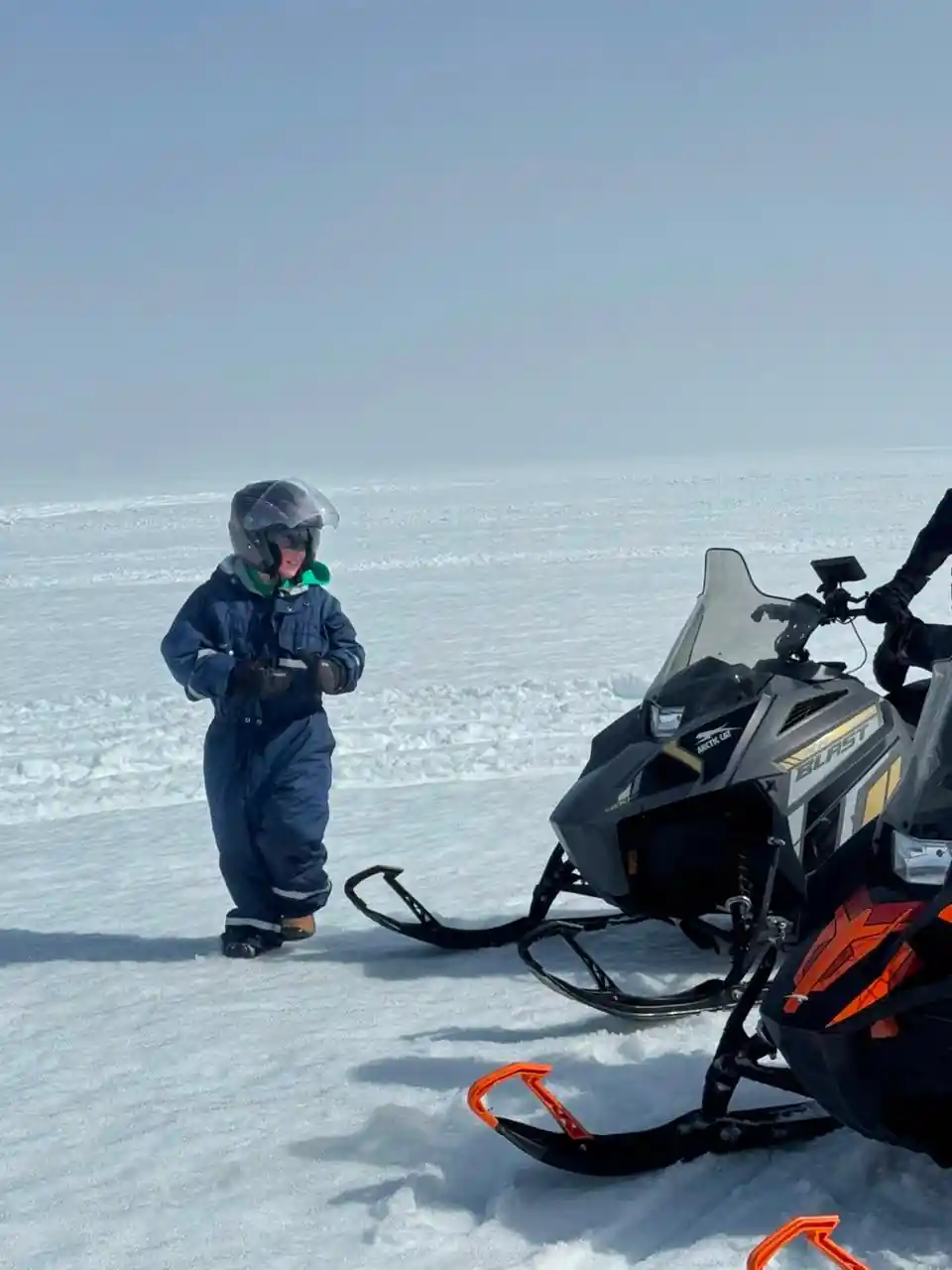
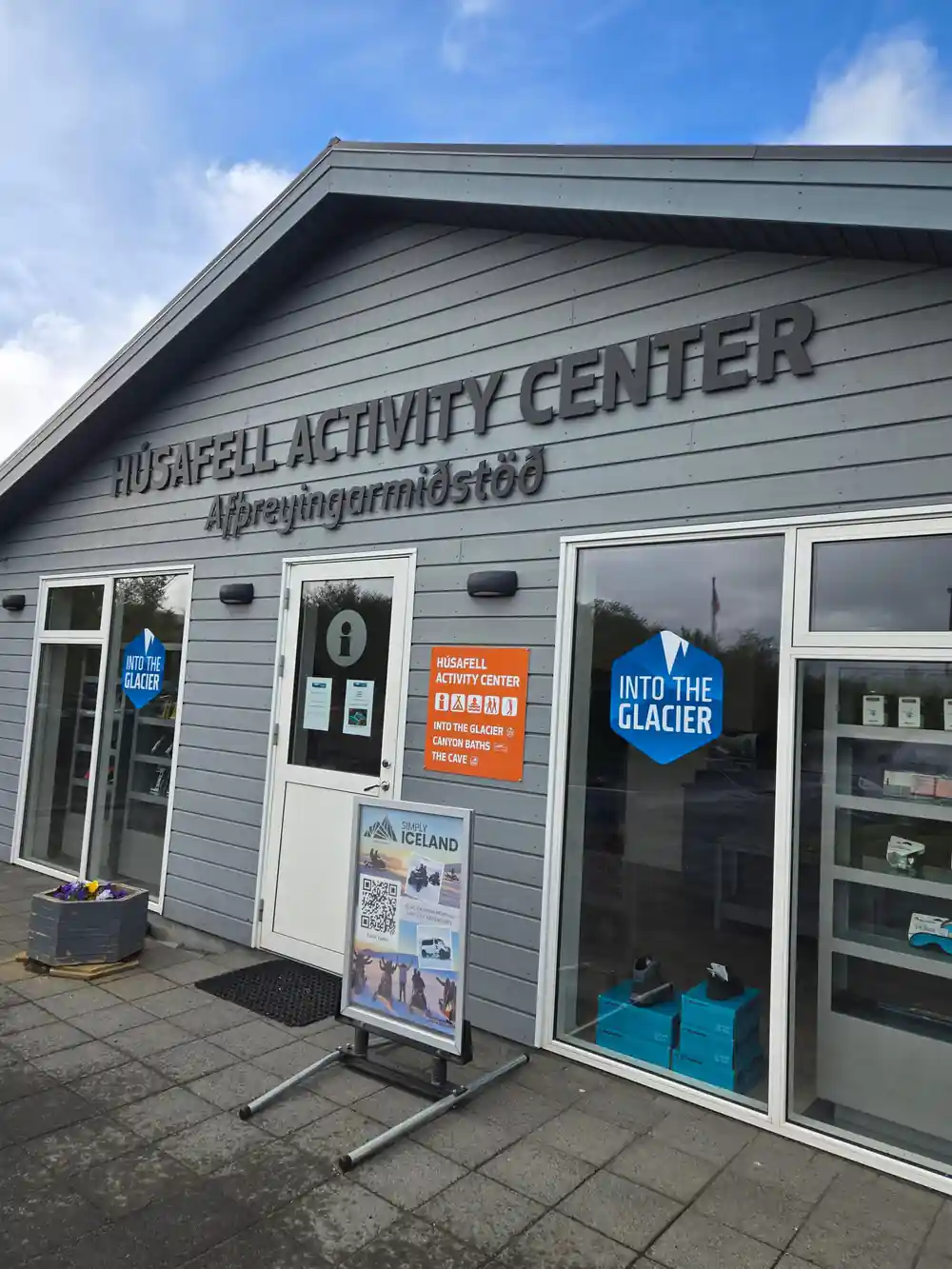
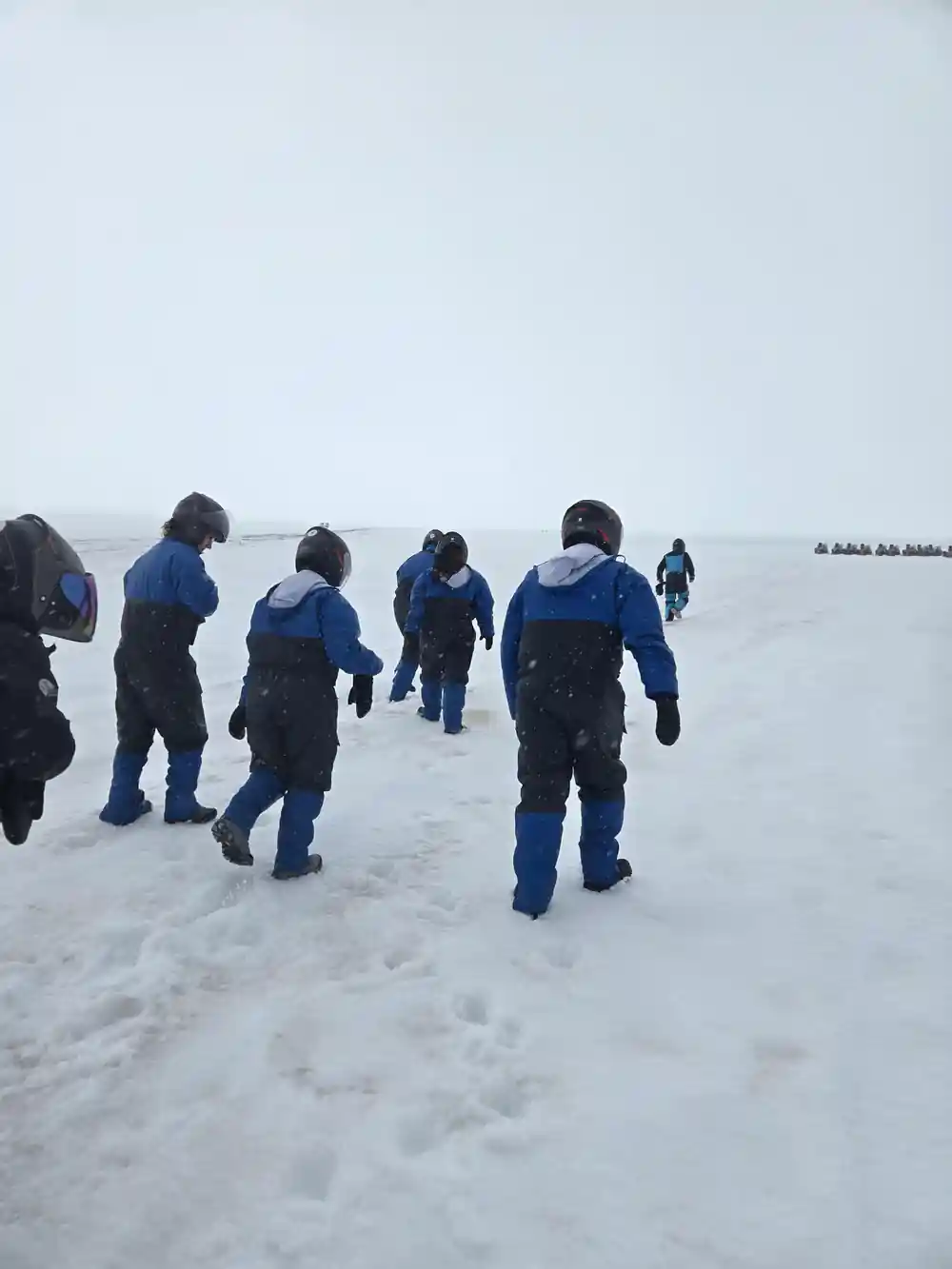
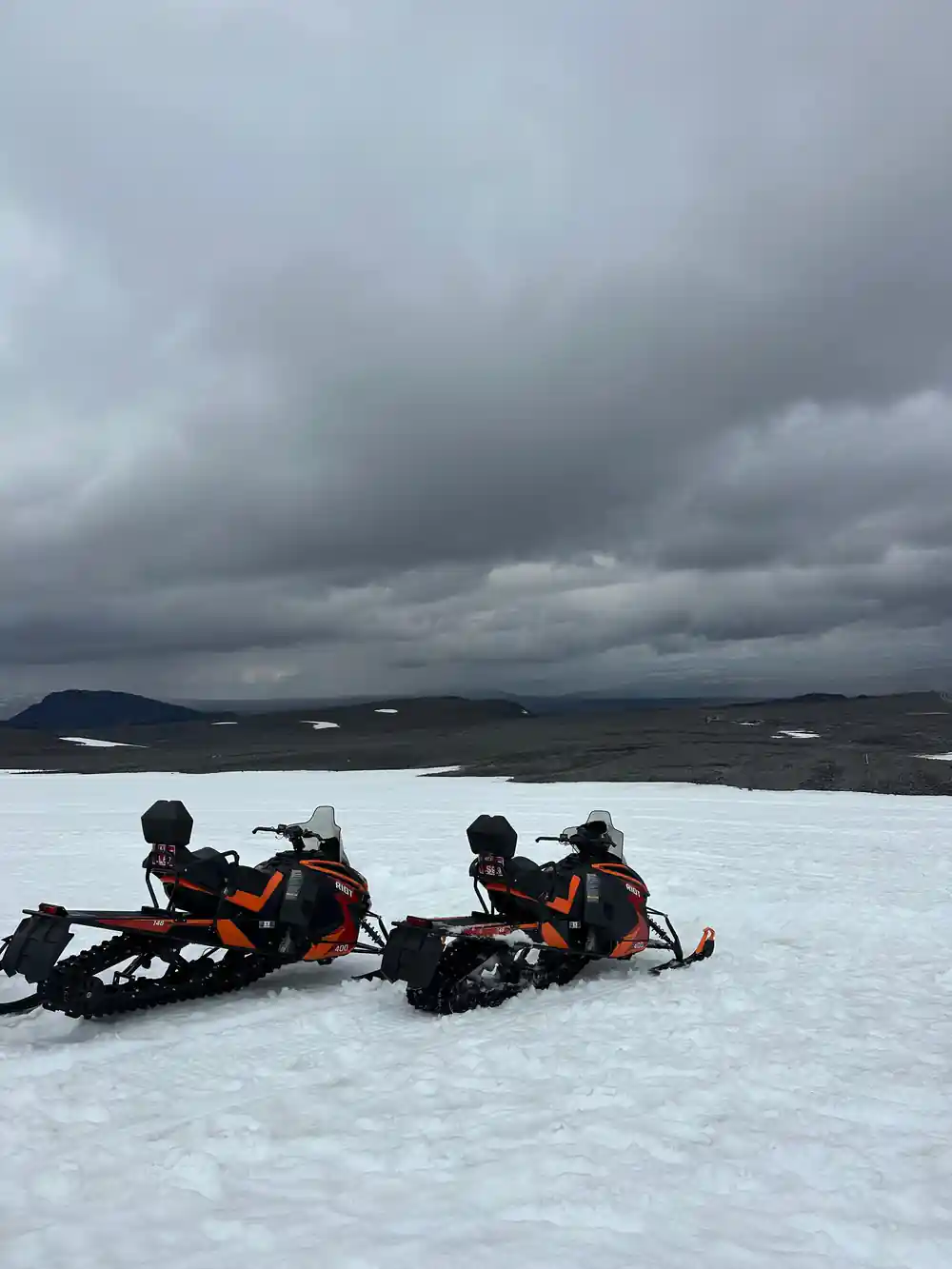
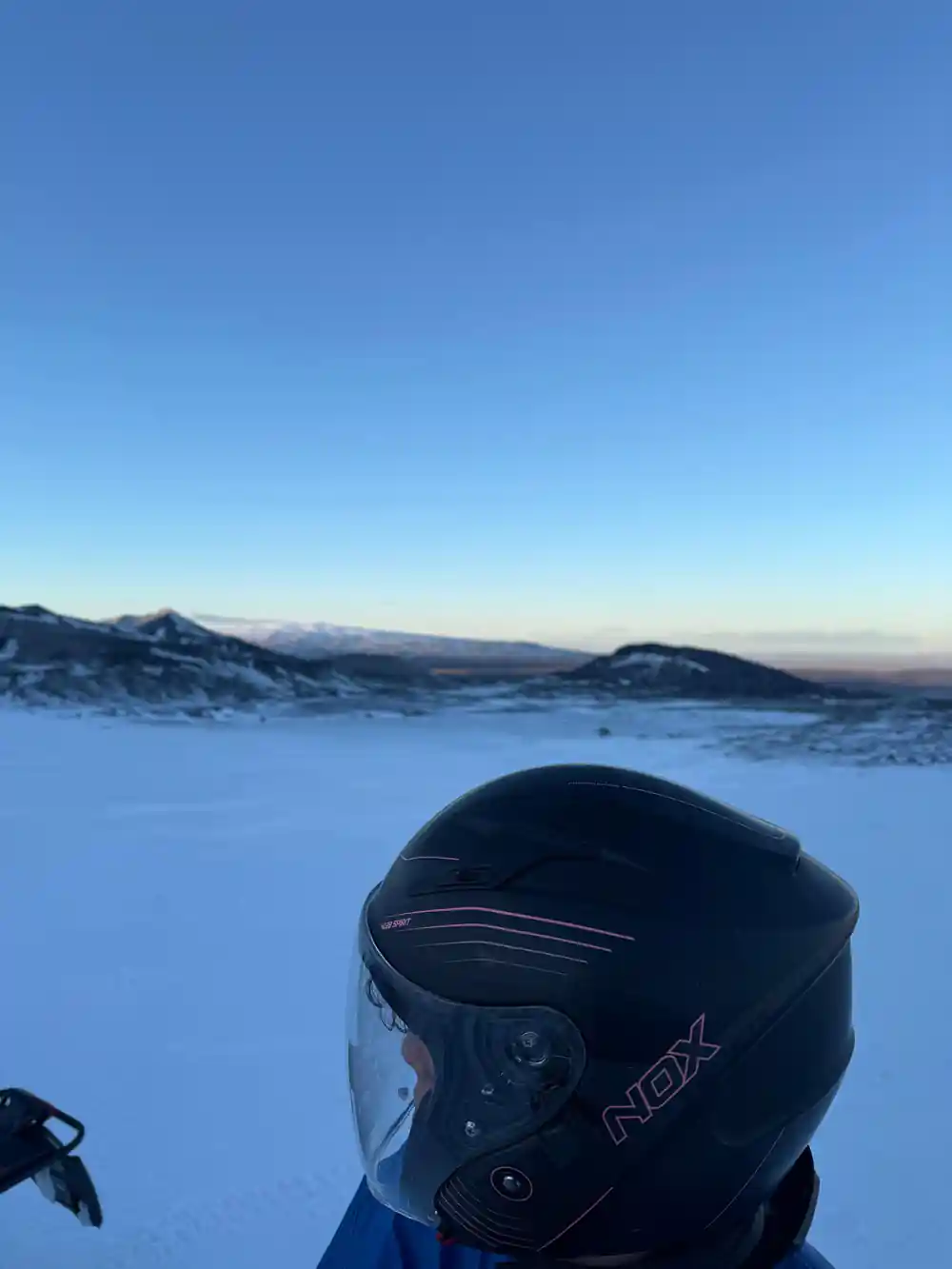
When you arrive at Húsafell Activity Center, the tour operator hands you essential cold-weather gear before you head to the glacier. You'll receive a helmet, a warm overall suit, overshoes, and a buff - a tubular fabric neck gaiter that protects your face and neck from wind and ice spray. These items are sized on-site to fit you properly. The helmet is non-negotiable for safety on the snowmobile, and the overall suit is a full-body layer designed to trap heat while you're riding across the ice field. The buff can be pulled up over your nose and mouth as conditions demand, and the overshoes slip over your regular footwear to keep snow out and warmth in.
Arrive with enough time to try on your gear and adjust it before the Jeep ride to Langjökull Glacier begins. Staff will walk you through what fits and what needs adjusting so you're comfortable for the 2-hour experience ahead. The overall suit is typically roomy enough to wear over layers, so don't worry if it feels loose at first. Overshoes come in several sizes and should feel snug but not tight around your ankles.
Base layers and what to wear underneath
Start with thermal or merino wool base layers that wick moisture away from your skin. Cotton holds sweat and loses insulation when damp, so avoid it entirely. A long-sleeve thermal shirt and thermal leggings create the foundation, and if you run cold, add a fleece or wool mid-layer on top. Since the overall suit covers your torso and legs, your base layers do the real work of keeping you warm during the snowmobile ride across the ice. The glacier wind is relentless even in calm conditions, and moisture from exertion or melting snow will chill you fast if you're not properly layered underneath.
Your second layer matters as much as your first. A fleece jacket or wool sweater adds crucial insulation without adding bulk, so it still fits comfortably under the overall suit. Bring an extra thermal shirt in your snowmobile gear bag in case you want to change after the ride, especially if you plan to explore Húsafell's natural hot springs or other activities afterward. The overall suit itself is windproof but not insulated, so it acts as a shell to trap the warm air your layers create.
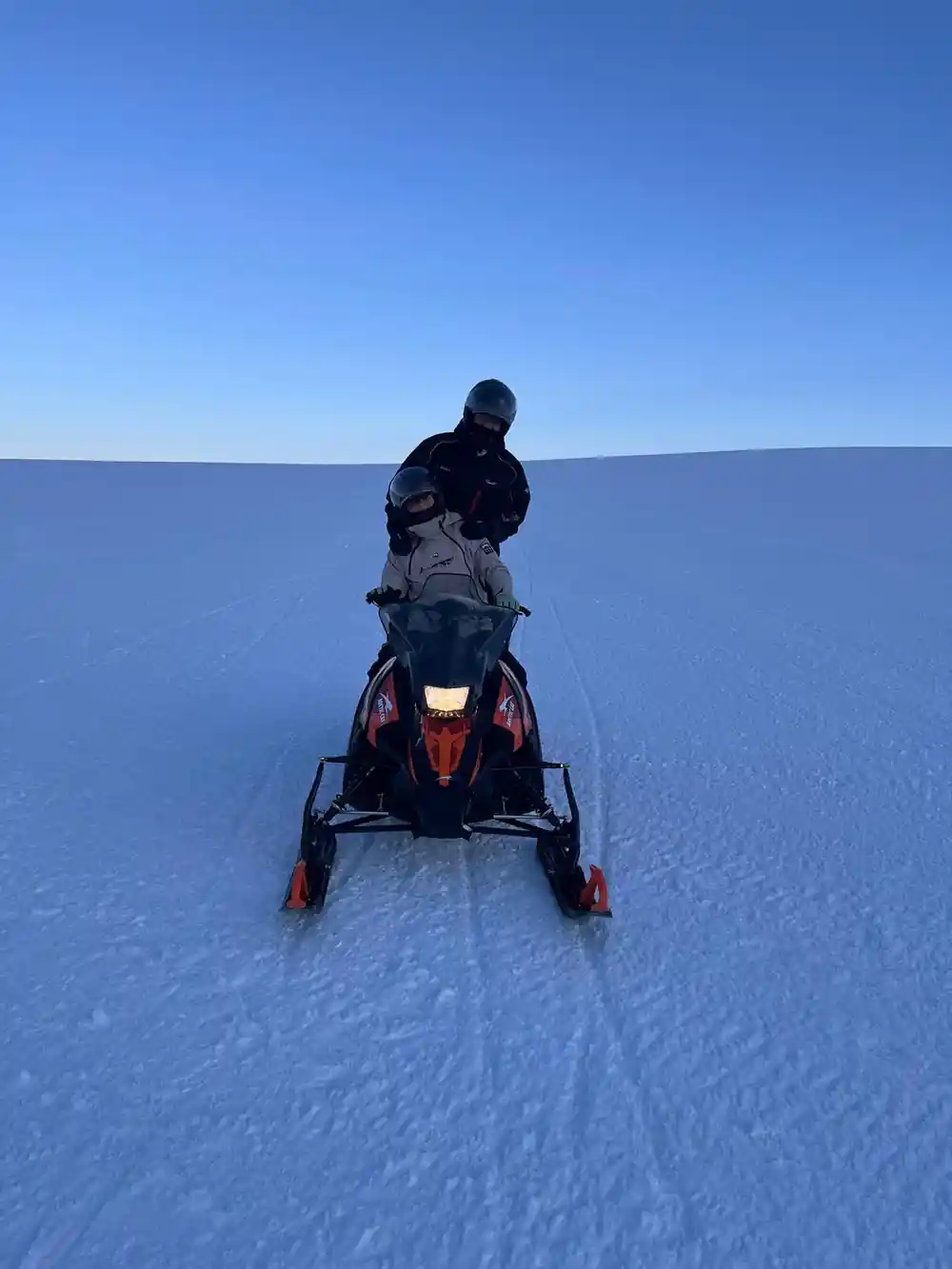
Guest suited up in supplied warm overalls and safety helmet
Footwear that fits inside the overshoes
Wear insulated, waterproof winter boots or hiking boots with thick socks - wool or synthetic blends work best. Your boots need to fit inside the overshoes the operator provides, so avoid bulky mountaineering boots or anything wider than a standard winter boot. Thick socks (aim for 70 percent wool or higher) cushion your feet and provide insulation, but two pairs of socks is the limit before the overshoes become too tight and restrict blood flow, which actually makes your feet colder. A single pair of heavy-duty thermal socks is often enough if your boots are already insulated.
Test your boot-and-sock combination by trying on the overshoes at the Activity Center. They should slide on smoothly and close around your ankle without pinching. The overshoes have a sole that grips the snowmobile's footrests, so they're designed to fit snugly. If your regular boots are not waterproof, the overshoes will protect your feet from the snow and slush you encounter during the Jeep ride to the glacier, but once you're on the snowmobile, your feet stay clear of most spray. Avoid canvas shoes, lightweight trainers, or any footwear without insulation; the glacier is far colder than Húsafell, and the wind amplifies cold dramatically.
Gloves and hand protection on ice
Bring your own insulated gloves or mittens - the operator does not provide them. Your hands are exposed while operating the snowmobile and will take the full force of wind and any ice particles that spray up. Mittens are warmer than gloves because your fingers share body heat, but gloves offer better dexterity if you want to adjust your buff or take photos during stops. Look for mittens or gloves rated for extreme cold, ideally with a leather or synthetic palm that provides grip and won't slip on the snowmobile's handles. Waterproof is essential; wet gloves in sub-zero temperatures lead to numb, painful hands within minutes.
Consider bringing a backup pair in your snowmobile gear bag. If your first pair gets damp from sweat or melting snow, you can swap them at Húsafell Activity Center before the Jeep ride begins. Some riders prefer thin liner gloves underneath insulated mittens so they can remove the mittens briefly without exposing bare skin. Make sure your gloves are snug enough that they won't fall off if you're holding onto the snowmobile, but loose enough that they don't cut off circulation.
Eye protection and glasses under your helmet
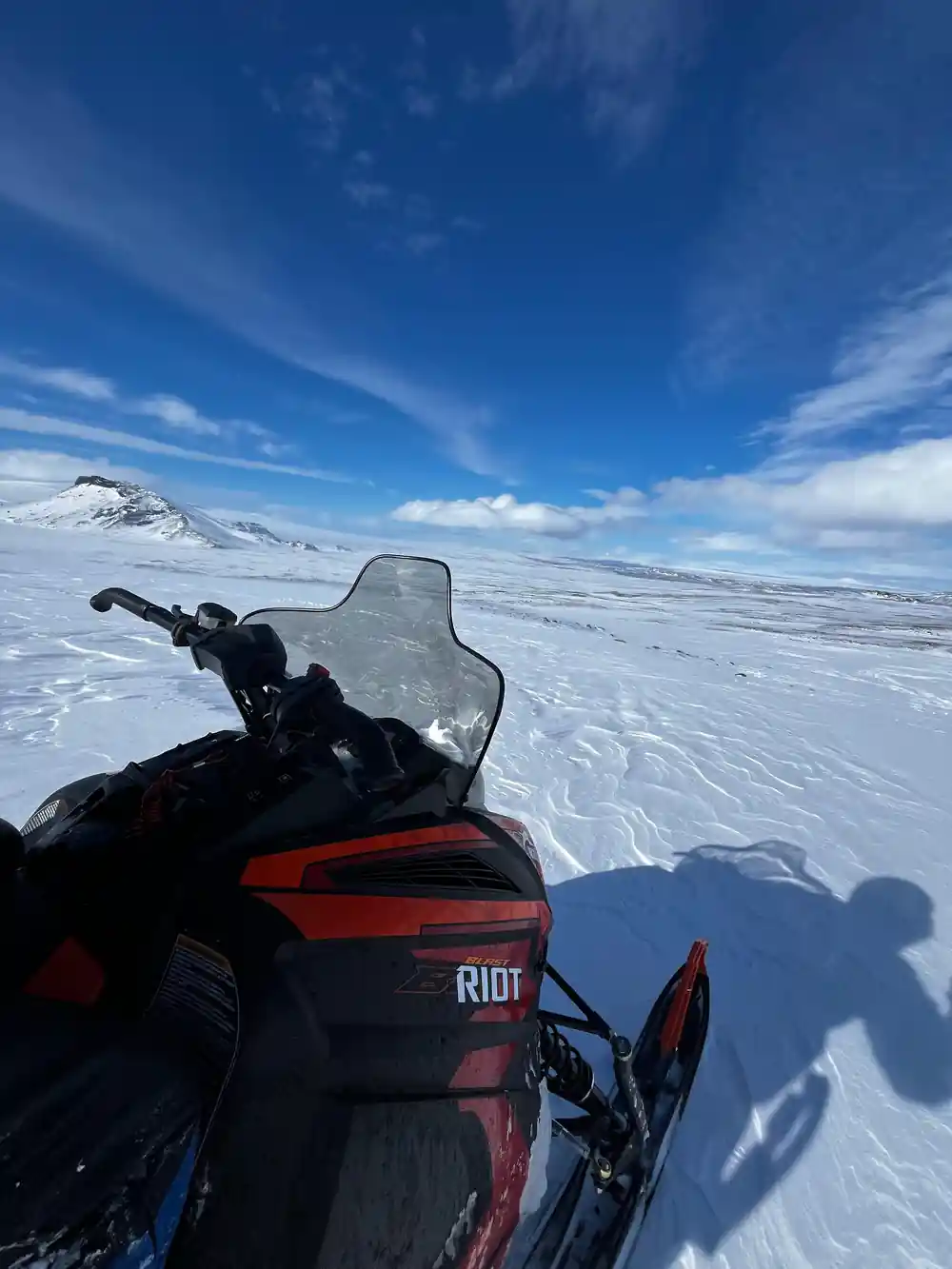
Sunglasses or glacier goggles are highly recommended on Langjökull because the white ice reflects intense sunlight and causes snow blindness if your eyes are unprotected for long periods. The operator provides your helmet, which has some coverage around the eyes, but it is not a complete shield. If you wear prescription glasses, they will fit under the helmet, though snugly. Ask the staff at Húsafell Activity Center to help you position your glasses so the helmet doesn't press them into your face during the ride. Polarized sunglasses reduce glare better than regular lenses, making the glacier landscape easier to see and less fatiguing on your eyes.
Glacier goggles that seal around your eyes offer the best protection because they prevent wind and ice spray from reaching your face. If you wear regular glasses, bring them in case you want to remove your goggles during breaks at the glacier. The helmet will stay on your head securely whether you're wearing glasses or not, but test the fit with your glasses on before you board the snowmobile. Clear or slightly tinted lenses work better in overcast conditions, while darker lenses suit bright, sunny days on the ice.
Phones, cameras, and keeping gear safe
Bring a phone or camera if you want to capture photos during the tour, but keep it in an inside pocket of your overall suit or a zippered pocket of a jacket under the overall. Cold batteries drain fast, so if your phone is essential for the day, keep it close to your body heat. The hour of snowmobiling creates vibration and movement, and items in external pockets or loosely held are at risk of being lost on the ice. A secure pocket in your snowmobile gear bag works for items you want to access at the glacier but not during the ride itself, such as a backup battery pack or a lens cloth for your glasses.
The Jeep ride to Langjökull gives you photo opportunities on the way, and you'll have time to take pictures once you reach the glacier. Plan when you want to use your camera and have it accessible in the Jeep. Gloves make it difficult to operate a phone screen, so consider removing your outer mittens for a moment if you want to take a photo, then put them back on immediately. Metal and plastic cameras can stick to bare skin in extreme cold, so keep gloves on or use a neck strap to secure your camera rather than holding it in a bare hand.
Preparing your snowmobile gear bag
Pack a small bag with essentials you might need before or after the tour: a change of socks, a dry thermal shirt, lip balm, sunscreen, and a water bottle if you've brought your own. This snowmobile gear bag stays with you in the Jeep and at Húsafell Activity Center but does not go on the snowmobile itself. You won't be able to access anything once the tour begins, so pack it strategically. A small backpack or duffel works better than a large suitcase because you'll carry it during the Jeep ride and may want to set it aside while you're on the glacier.
Leave your phone's location services on if you plan to use the camera, and ensure your battery is charged before you leave your accommodation. The tour lasts 2 hours total, including the Jeep ride to and from the glacier and the snowmobiling itself, so you won't be away from Húsafell Activity Center for long. Dress in your snowmobile gear bag's backup clothes before leaving the Activity Center if you're spending the rest of the day outdoors. The ride can be intense, and changing into dry clothes once you're done makes a significant difference in your comfort level.
You've got the gear. Book your snowmobile date.
from US$284Reserve now & pay later
We Provide
- Helmet
- Warm overalls
- Overshoes
- Buff
Know Before
- Duration2 hours total
- Group sizeMaximum 14 people
- Snowmobile time1 hour on glacier
- TransportSuper Jeep to site